Learn about who invented virtual reality and how this groundbreaking technology evolved to create today’s experiences.

Who Invented Virtual Reality?
Virtual reality (VR) didn’t come from a single inventor. It evolved over decades of work from pioneering scientists armed with audacity and new hardware. This guide breaks down exactly who invented virtual reality, how VR devices developed, and which breakthroughs shaped the VR systems we use today. You’ll learn how VR entered gaming and entertainment and why understanding its origins matters for the future of immersive technology.
Table of Contents
What Is Virtual Reality?
Who Invented Virtual Reality?
How Did VR Technology Evolve Over Time?
What Technologies Make Virtual Reality Possible?
How Did The Term “Virtual Reality” Come To Be?
Who Contributed To Modern VR As We Know It Today?
How Has Virtual Reality Changed Entertainment And Gaming?
What Is The Future Of Virtual Reality?
Why Does Knowing Who Invented Virtual Reality Matter?
What Is Virtual Reality?
Virtual reality (VR) is built to simulate a digital environment that feels completely real. It plays to senses, including sight, sound, and motion, within a three-dimensional world created by technology. VR acts as a bridge between imagination and innovation, allowing users to step directly into a virtual environment where they can explore and interact.
Unlike AR or MR, VR replaces actual reality entirely. Instead of overlaying digital elements onto the physical world, VR immerses users in the virtual world viewed through a headset, which responds in real time to their movements.
It’s important to understand where VR technology differs from augmented reality (AR) and mixed reality (MR).
Augmented Reality: Overlays digital elements, such as images, sounds, or text, onto your physical surroundings. AR blends the digital and physical worlds through devices like smartphones, tablets, or smart glasses.
Mixed Reality: Merges the real and virtual worlds so that physical and digital objects interact in real time. In MR environments, virtual objects respond to your movements and surroundings, creating a more immersive and dynamic experience.
AR and MR are useful and entertaining technologies, but the pinnacle of virtual world technology is VR.
Who Invented Virtual Reality?
The invention of the virtual reality system as we know it today cannot be credited to one single person or team. Instead, many inventors and creatives across decades pioneered technology that led to modern VR.
In this article, we’ll discuss these prominent figures, including:
Morton Heilig and his Sensorama (1950s–60s), which was one of the earliest immersive systems
Ivan Sutherland and the Sword of Damocles (1968) was the first true VR headset prototype.
Jaron Lanier and the first VR company (1980s) popularized the term “virtual reality”
Thomas Furness’s air force VR cockpit (1986) included CG graphics and real-time interactivity
NASA’s Project VIEW (1989), a VR astronaut trainer that led to the Nintendo Power Glove
Clearly, the question, "Who invented virtual reality?" is best answered by a timeline of the evolution of virtual reality devices.
How Did VR Technology Evolve Over Time?

The evolution of VR is one of innovation, failure, and imagination, and the ongoing push to create an ultimate display capable of replicating the real world. These are the inventors and companies that helped make VR what it is today.
The 1950s–1970s: The Birth of Immersion
Morton Heilig was an American filmmaker and a pioneer in VR technology. He developed the Sensorama Simulator in 1962, an immersive, multi-sensory mechanical theater. His prototype was essentially an arcade-style theater cabinet, featuring a stereoscopic display (3D), stereo speakers, fans, smell generators, and a vibrating chair. He filmed several short movies designed for his Sensorama, and though the machine never took off as a business model, it was a pioneer of VR tech and went on to inspire future VR inventors.
Six years later, in 1968, American computer scientist Ivan Sutherland invented, with the help of his student Bob Sproull, the first virtual reality (VR) and augmented reality (AR) head-mounted display (HMD).
The device, now commonly referred to as the Sword of Damocles, combined stereoscopic imaging, motion tracking, and computer-generated graphics. It was the first fully integrated HMD, capable of displaying simple floating wireframe cubes and demonstrating the feasibility of interactive 3D immersion.
The 1980s–1990s: The Rise of VR Research and Commercial Attempts
By the 1980s, VR moved from experimental tinkering in small laboratories to ambitious startups and the first real commercial push. One of the most influential players was VPL Research, founded in 1984 by computer scientist Jaron Lanier. VPL became the first company to sell VR products directly to consumers and research institutions, introducing groundbreaking hardware like the:
DataGlove: A pioneering motion-sensing glove that translated hand and finger movements into digital input, allowing interaction with virtual environments.
EyePhone HMD: A head-mounted display that delivered stereoscopic 3D visuals and head tracking to immerse users inside computer-generated worlds.
DataSuit: A full-body sensor suit that captured limb and torso movements for physical interaction and motion control within virtual reality systems.
These devices allowed users to see computer-generated environments and interact with them using full-body motion capture, an unappreciated leap toward truly embodied digital immersion, considering that the company went under.
Around the same time, NASA aggressively adopted VR as a training tool. At Ames Research Center, engineers developed the Virtual Interface Environment Workstation, which paired head tracking with stereoscopic displays and gloves to simulate tasks astronauts would perform during space missions.
People went wild about the possibilities of VR, but the era also exposed VR’s limitations. Early headsets were costly, cumbersome, and visually underwhelming, relying on low-resolution graphics. The technology wasn’t mature enough to sustain mainstream enthusiasm, and by the late 1990s, the combination of high costs and disappointing visual fidelity led to a decline in public interest.
Despite this commercial slump, the breakthroughs of the ’80s and ’90s laid the groundwork for the VR renaissance that would follow in the decades ahead.
The 2000s–Today: The Modern VR Renaissance
The 2000s marked a turning point for VR, but the real explosion didn’t happen until the company Oculus (founded by inventor Palmer Luckey) launched a crowdfunding campaign and released its first headset in 2013. The chunky design and decent graphics sparked public demand, and platforms HTC Vive and PlayStation VR followed with precision tracking and experiences designed for at-home users.
By 2020, the tech had rapidly improved with:
Room-scale motion tracking increased realism
Inside-out sensors replaced bulky external rigs
Wireless systems that allowed freedom of movement
Lighter designs brought lower price points
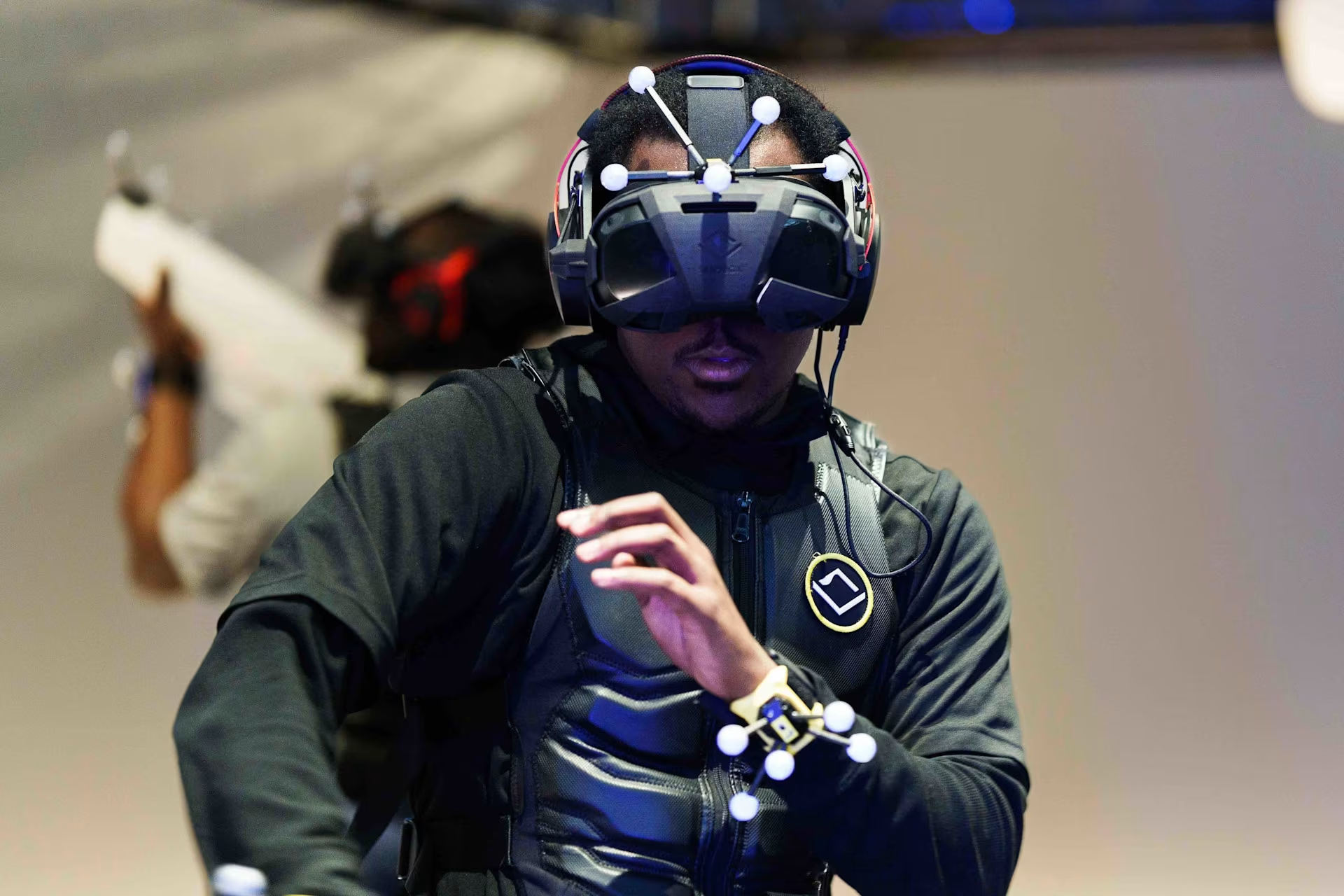
The VR renaissance wasn’t just for the living room. Location-based experiences like Sandbox VR transformed VR into a social adventure, becoming something to share. Sandbox VR launched full-body motion capture and cinematic worlds built for groups, the kind of heart-pounding realism home systems couldn’t replicate.
VR, as modern audiences know it, was made possible by hardware upgrades, but it was the inventor's creativity that made VR a true, immersive experience.
What Technologies Make Virtual Reality Possible?
Above all, advanced computer processing is what made modern VR possible. The first 64-bit consumer CPU was launched in 2003, followed by advanced multi-core processors. These are the kind of powerful computation machines needed to run the graphics required for immersive, realistic VR.
Beyond CPUs, these are the technologies that make VR possible:
Hardware: VR headsets, motion sensors, haptic feedback devices, and cameras.
Software: Rendering engines, 3D modeling, and tracking algorithms.
Human Factors: Spatial audio, comfort design, minimizing motion sickness.
How Did The Term “Virtual Reality” Come To Be?
Jaron Lanier popularized the term “virtual reality” and is often credited with the title. In reality, the term VR had been used in science fiction and by other computer scientists for years before. However, Lanier is typically credited with inventing the term because he founded the first true VR company.
Lanier used the phrase to unify a wide range of immersive technologies under a single conceptual framework, helping researchers, artists, and engineers rally around a shared vision of computer-generated worlds.
Who Contributed To Modern VR As We Know It Today?
The virtual reality we know today exists because of decades of iterative research, hardware experimentation, and creative breakthroughs that built on each other over time. Each inventor and company mentioned in this article only scratches the surface. Modern VR exists on the shoulders of centuries of technological development and innovation.
After 2000, BR accelerated thanks mostly to large companies and visionary innovators, such as:
Oculus: Kick-started the modern VR boom with accessible, high-performance VR headsets and advanced rendering technologies.
HTC Vive: Pioneered room-scale tracking and precision controllers, establishing industry standards for spatial accuracy.
Sony (PlayStation VR): Brought console-based VR to millions of households with consumer-friendly pricing and strong game development support.
Meta and Apple: Pushing boundaries in mixed reality integration, hand tracking, ultra-high-resolution displays, and lightweight form factors.
How Has Virtual Reality Changed Entertainment And Gaming?

Early VR experiences were mostly single-user simulations. As a result, it was isolated gaming that was limited by hardware. VR has evolved into a social, interactive medium that spans gaming, storytelling, and shared adventures. It’s moved into the multiplayer realm.
Home VR systems let users explore games, fitness apps, social hangouts, and cinematic worlds, but the biggest shift has been the rise of multiplayer, location-based VR. Platforms like Sandbox VR merge Hollywood-quality environments with real-time group interaction, full-body motion capture, and tactile feedback. Friends can explore worlds together and be present in the same virtual space. This move from solitary immersion to social adventure represents one of the biggest transformations in VR’s history.
What Is The Future Of Virtual Reality?
The future of virtual reality is exciting to consider, and there are many possibilities and applications. When it comes to hardware, we can probably look forward to lightweight, wireless headsets that push past current bulk and standalone devices with high-fidelity visuals and integrated sensors. Innovations in haptics, full-body motion capture, and even smell and vibration feedback may allow users to not only see and hear but truly sense a VR space.
When it comes to artificial intelligence and spatial computing, the opportunity is clear. AI may be able to build personalized virtual worlds and enable spatial-aware interactions in extended reality (XR) environments. Cloud-based delivery of VR via ultra-fast networking means future headsets will load even faster, with less lag.
What’s really exciting is that in education, healthcare, and enterprise settings, VR is already making changes. Training, remote collaboration, therapy, and simulation are gaining traction, as organizations recognize VR’s capacity for safe, immersive, cost-effective learning.
In the entertainment industry, pioneer Sandbox VR is defining the next generation of VR fun. Even now, groups of friends roam full-body “holodeck-style” VR arenas, equipped with haptic vests and motion capture gear for experiences not feasible at home. This is a method of entertainment and bonding that previously only existed in science fiction.
Their model hints at a future where social VR experiences become location-based, communal, and cinematic, blurring the line between gaming and real adventure.
Why Does Knowing Who Invented Virtual Reality Matter?
Understanding VR’s origins helps you appreciate current innovations. It shows modern audiences how the journey from early prototypes to fully immersive experiences reflects human creativity.
This transformation of virtual reality technology is what makes Sandbox VR’s mission a reality. Sandbox VR aims to bring people closer together through world-class immersive experiences. This is only possible because of the brilliance and bravery of past inventors.
Breakthroughs in displays, tracking, and computing took virtual reality from a dream to a clunky, arcade-like system to a full-room immersive experience.
To experience the full evolution of VR firsthand, explore today’s most advanced, cinematic group VR experiences with Sandbox VR.
FAQs
Question: Was virtual reality invented by one person?
No, VR was developed over decades by multiple inventors and researchers.
Question: Did Jaron Lanier invent virtual reality?
Jaron Lanier coined the term “virtual reality” and advanced early VR systems in the 1980s. However, he is not the sole inventor of VR.
Question: Was the first VR headset created in the 1960s?
Yes, Ivan Sutherland built the first VR headset prototype, the “Sword of Damocles,” in 1968.
Question: Is VR technology still evolving?
Yes, VR continues to evolve rapidly, especially with new group-based and immersive experiences. The graphics and tech sensitivity will also continue to improve.
Question: Can I experience modern VR similar to early inventors’ visions?
Yes, today’s Sandbox VR experiences bring those pioneering ideas to life in cutting-edge ways. You can enter the world of your favorite TV show or explore an alien planet. The possibilities are now limitless.
Other Articles
Immersive Storytelling In VR
Immersive storytelling in VR transforms gameplay, pulling players into fully interactive worlds for unforgettable Sandbox VR experiences.

Dynamic Gameplay Experience Guide
Dynamic gameplay experience explained in a clear, simple way. Learn how DGE videos work and how they elevate every Sandbox VR adventure.
