What are haptics and how do they enhance VR? With touch-based feedback, Sandbox VR experiences feel incredibly real.

What Are Haptics?
Do you set your phone to vibrate? Or maybe your controller buzzes and jolts in your hands as you progress through the levels of your favorite video game. These are alerts and interactions designed to engage with your sense of touch are called haptics. These are technologies you can feel.
This article dives into what haptic technologies are, with an overview of how they work, their application, and how they help drive the immersive virtual reality experiences at Sandbox VR.
Table of Contents
What are Haptics?
What are Haptics and Why do they Matter?
How does Haptic Feedback Work?
What are the Main Types of Haptic Devices?
How are Haptics Used in Virtual Reality?
What are the Benefits of Haptic Technology?
How will Haptic Feedback Shape the Future of Virtual Reality?
How can You Experience Advanced Haptics with Sandbox VR?
What Are Haptics?
The word "haptic" derives from the Greek word haptikós, meaning "to touch" or "to grasp." It didn't get a lot of use in English until electronic devices started incorporating features designed to interact with our sense of touch. There was a need to describe alerts and features that relied on movement and vibration to get our attention. So "haptics" came to describe the increasingly important science of touch and tactile feedback.
What are haptics and haptic technologies in real terms? These technologies are all the touch-based cues and responses you get from devices and tech-driven experiences. That's everything from the tiny vibration of your phone to confirm you pressed a button or clicked a link, to the shudder of a nearby explosion in an immersive virtual reality (VR) experience.
At Sandbox VR, haptics power our VR tech, letting guests feel a shotgun's recoil or a zombie's attack.
We'll go over the various types and benefits of haptic technology currently in use, as well as some real-world examples of haptics.
What are Haptics and Why do They Matter?
Nowadays, "haptics" refers to haptic technology, which is an umbrella term for any technology that engages with the user through some element of their sense of touch.
When your phone vibrates as you tap on your virtual keyboard, that is haptics in action. If your car's steering wheel vibrates to alert you that it has detected a potentially dangerous lane departure, that's also haptics. Basically, any alert or interaction that engages with your sense of touch can be termed "haptic feedback."
And then there are categories of haptic feedback, such as "tactile feedback", which is essentially surface-level engagement through touch. Physical buttons, for example, have a shape that you can feel with your fingers without necessarily seeing them; that's tactile feedback. So too is the tangible "click" of a heavy switch flicking into position.
Haptics simulate tactile feedback, bridging the gap between digital and physical worlds. As such, haptics are an important way of bridging the gap between the digital and physical world, reassuring users that a device has received the necessary input or is performing a required task.
How Does Haptic Feedback Work?
The most basic haptic feedback mechanisms are actuators, devices that make something move or operate, triggered by sensors. Examples include a phone's vibration motor or a car's adaptive headlights. The signal that triggers an actuator is often an electrical impulse, which might come from a user pressing a button or activating a motion or light sensor.
There are two basic types of haptic feedback that are most commonly deployed: tactile feedback and force feedback. Tactile feedback can be as simple as the tangible click when a switch is flicked or the vibration alert on your phone. Force feedback relies on pressure or resistance, like the feeling of resistance or pushback from the steering wheel in a driving simulator.

The Role of Sensors and Actuators
Haptic feedback technology is a broad field, but the most common methods of providing feedback boil down to an interaction between sensors and actuators. Sensors detect input, signal the actuator, and the actuator produces a movement or operation that the user can feel.
An example is the old method for producing phone vibrations. This method relied on a motor with an off-center weight that would wobble when activated. A text or incoming call generated the signal, the motor activated, started to wobble, and the user felt a vibration.
A modern version of the same concept uses electromagnetism, activated by an incoming signal like a text, to activate a rapidly changing polarity that causes tiny magnets to move back and forth very quickly: a vibration alert.
Example of Haptics in Action
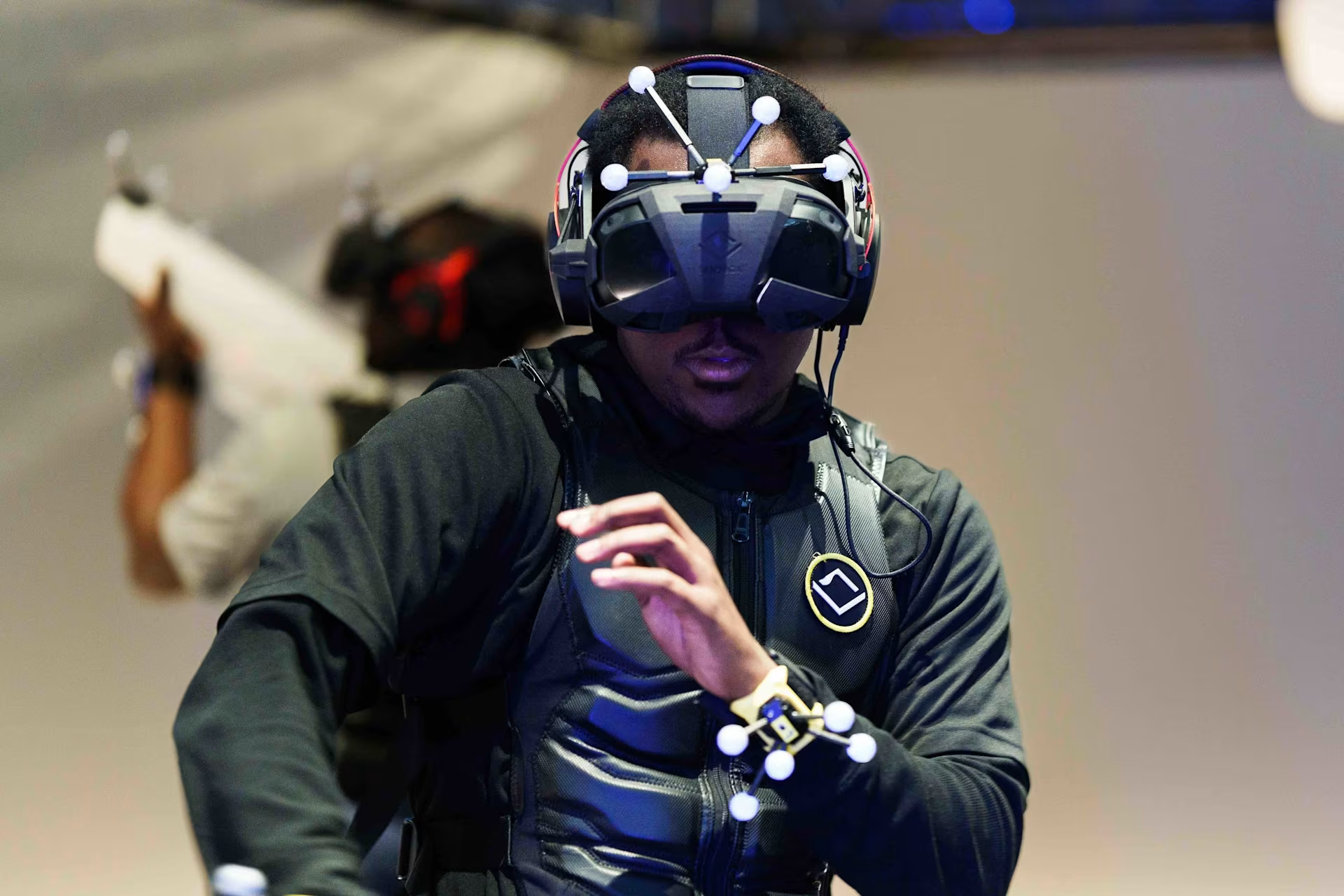
If you increase the complexity of both signal and actuated response, you reach the level of haptic devices used in virtual environments. At Sandbox VR, you'll strap on a haptic vest that receives signals based on your interaction with what you're playing. As your gun fires or an enemy strikes, you'll feel every thump.
What Are The Main Types Of Haptic Devices?
The range of haptic devices grows daily. But there are three main types of haptic devices you're likely to encounter: handheld, wearable, and environmental.
Handheld haptic devices include smartphones and game controllers. Wearables range from haptic vests to shoes that generate vibrations in sync with selected music. And environmental haptic systems range from air quality alerts to thermal regulation systems.
Wearable Haptic Devices
Wearable haptic devices like gloves, vests, and suits provide full-body immersion. Users wearing haptic gloves can get touch feedback on their fingertips, while a haptic vest can simulate everything from the heavy recoil of a rifle to the light patter of rain on clothing.
Haptic Interfaces in Gaming and VR
Unsurprisingly, gaming is driving a lot of the demand for haptic devices and interfaces. We've grown accustomed to controllers that vibrate in our hands or even VR treadmills that support running and jumping in VR environments.
At Sandbox VR, our wearable haptic vests deliver the shudders, thumps, and clicks that contribute to our fully immersive VR experiences. Wrist and ankle sensors ensure your movement is captured perfectly, and our environmental features, like fans, are triggered by certain in-game actions to add even greater depth to the player experience.
How Are Haptics Used In Virtual Reality?
Haptics are used in VR environments to enhance realism. This is achieved by coordinating haptic feedback with visual and audio cues, like a blast vibration along with the noise and sight of an explosion.
In the Sandbox VR experience, realism goes even further with the emotional impact of a multiplayer environment. With your friends reacting to the same sights and sounds alongside you, your collective laughter, surprise, and triumph become as much a part of the realism of the experience as the tactile feedback you get from a VR handshake or feeling the tension of a bowstring as you aim at an enemy.
How Do Haptics Connect The Physical And Virtual Worlds?
Human sensory perception is the most significant connection between the physical and virtual world. The more senses the virtual world engages, the closer it gets to simulating a real-life experience. Sight and sound are important, but touch helps to ground digital interactions in reality. In part, this is because touch is a two-way sensation: You're as much touching something as being touched by it.
At Sandbox VR, we integrate haptics into our virtual environments to enhance the realism of the experience. If you can feel wind on your face or a zombie clawing at your chest, you have a sense of presence in the virtual environment that goes far beyond an immersive audiovisual experience.
What Are The Benefits Of Haptic Technology?

Haptic technology has several benefits. In gaming, it contributes to realism and the overall gaming experience. Haptics make digital environments tangible, and players can react faster when they can "feel" interactions.
Haptics are also extremely helpful in training simulations, simulating driving and flight experiences, or offering resistance and force feedback for training doctors and nurses in certain medical scenarios.
In the world of Sandbox VR, we focus on using haptics to enhance our players' emotional connection to the experience. Physical sensations like a zombie's scratch or a weapon's recoil deepen a player's engagement with the experience by adding another dimension to the digital world. If you can feel it and touch it, are you entirely sure it isn't real?
How Will Haptic Feedback Shape The Future Of Virtual Reality?
We can expect haptic feedback technology will continue to enhance the virtual reality experience moving forward. Tactile mapping, for example, is a technology with tremendous promise for helping the visually impaired navigate environments through touch, but it can also potentially be adapted for use in AI-driven gaming scenarios.
Microfluidics is an emerging field that uses tiny amounts of air or liquid to create pressure or temperature sensations, which opens up the possibility for VR environments to incorporate tangible climatic changes, like the sensation of rain or a sudden blast of cold air.
Smart fabrics embedded with electronic components and sensors hold great promise for the future of wearable haptic technology, leading to lighter equipment or costumes with haptic feedback sensors built in.
In time, haptics could have a transformative effect on remote work, social interaction, and entertainment. Think about the potential for artists to simulate working with clay to create digital models that can then be 3D printed, or the ability to "feel" and manipulate objects using robotics and haptic technology in applications such as surgery or manufacturing.
Sandbox VR’s Role in the Future of Haptics
As the world's leading proprietor of immersive, multiplayer VR experiences, Sandbox VR is at the forefront of innovation in touch-based realism to drive the latest developments in storytelling and player engagement. Through collaborations with partners like Netflix and the development of our own proprietary haptic systems, we continue to push the boundaries of haptics and VR tech.
How Can You Experience Advanced Haptics With Sandbox VR?
At Sandbox VR, every session begins with a brief orientation. You'll strap on a haptic vest, wrist and ankle sensors, then pick out a weapon for your pending adventure. Next, a quick walk-through of the equipment and gaming area gives you all the knowledge you need for your experience.
Haptic feedback, like gun recoil, combines with your engagement with your teammates and the virtual environment for full story immersion. Sandbox VR's experiences are tailored for our equipment and environments, made to fully engage all your senses.
Explore our experiences online, check out our FAQs, or contact your nearest Sandbox VR for information about bookings for private events or large groups. Or just book a session today and explore one of our unique virtual environments for yourself.
TL;DR
Haptics is the science of touch, and haptic technology gives us device interactions and engagements we can feel. From vibrating phones to Sandbox VR's fully immersive virtual environments, haptics cover a broad spectrum of experiences, from the everyday to the spectacular.
Experience the spectacular end of the haptics spectrum with a fully immersive VR experience at Sandbox VR.

FAQs
Are haptics the same as vibration?
Vibration is a type of haptic feedback. As a category, haptics includes the full range of touch sensations, from vibration to pressure to movement and even temperature.
Can haptics make VR feel completely real?
Haptics are one element of the immersive VR experience. Other elements include the visual effects of the gameplay, storytelling, sound, and the ability to interact and engage with your friends in a fully virtual environment.
The combination of all these elements, along with tactile feedback, contributes to the VR experience. And every year, incremental improvements to the technology drive further enhancements to the overall experience.
Does Sandbox VR use haptic technology?
Yes. The Sandbox VR experience includes a wearable haptic vest that provides tactile feedback as well as movement sensors on your wrists and ankles to make every action feel immersive.
Other Articles
Immersive Storytelling In VR
Immersive storytelling in VR transforms gameplay, pulling players into fully interactive worlds for unforgettable Sandbox VR experiences.

Dynamic Gameplay Experience Guide
Dynamic gameplay experience explained in a clear, simple way. Learn how DGE videos work and how they elevate every Sandbox VR adventure.
