Corporate wellness activities that boost morale without forced fun. Try immersive team VR experiences that engage employees and support wellbeing.

Corporate Wellness Activities That Boost Morale Without Feeling Forced
Corporate wellness activities don’t land when employees are unengaged or forced to participate. Planning a modern corporate wellness program requires understanding what works, why, and your best experience options, especially if your goal is a successful corporate wellness program. Companies can boost morale and improve employees' mental and physical health through the right experiences and planning.
Table of Contents
Why Are Corporate Wellness Activities Important For Teams?
Why Do Traditional Wellness Initiatives Fail?
How Can You Make Wellness Activities Authentic?
Can Corporate Wellness Activities Increase Job Satisfaction?
What Are Some Fresh Corporate Wellness Activities Teams Actually Enjoy?
How Do You Measure Success Without Killing The Vibe?
What Should Companies Consider When Planning Wellness Activities?
Real-World Success Stories: How Teams Thrive With VR Experiences
Why Are Corporate Wellness Activities Important For Teams?
Corporate wellness activities are any organized company events that promote employee health. Specifically, wellness is the ongoing, intentional pursuit of activities, choices, and ways of living that support overall, holistic health. Workplace wellness activities are often part of broader corporate wellness programs designed to support long-term employee health.
Done well, these programs are proven to:
Boost employee job satisfaction
Increase employee productivity
Improve employee physical and mental health
Reduce employee stress
Increase employee retention
These programs bond teams by promoting healthy habits, improving employee morale, and fostering group cohesion.
The Link Between Employee Health and Productivity
Evidence links wellness initiatives to reduced stress and improved focus. The mental health benefits include reduced burnout, better emotional regulation, and stronger emotional wellness through consistent mental health support. The physical health benefits include increased energy and fewer sick days.
These programs benefit employees in many ways, but not all wellness activities are equally effective.
Why Do Traditional Wellness Initiatives Fail?
The challenge is that traditional wellness programs can feel forced and unproductive. The two main issues are mandatory attendance and lack of genuine interest. Employees end up feeling a sense of “forced fun.” Employers plan events, activities, and initiatives without asking employees what they actually want. Employees will likely still show up, but low wellness program participation signals they're not really getting anything out of the experience.
A one-size-fits-all approach is almost always the cause of this disconnect. A generalized wellness activity completely ignores diverse employee needs.
Isolated wellness activities are a major contributor to this disconnect. Activities like individual gym memberships and solo meditation apps are popular with corporations, but can lead to missed social connections and isolation.
How Outdated Approaches Undermine Wellness Goals
Wellness is holistic and involves specific health goals and employee free choice. This is where outdated programs miss the mark.
Lack of Choice: Employees want autonomy and options. A mandatory wellness program with few options fails to let employees choose what’s best for them.
Obligatory Programs: These initiatives shouldn’t feel like an additional work obligation instead of a benefit. This breeds frustration.
Lack of Mental and Physical Health Goals: Random activities or assignments without specific growth goals are a waste of resources and employee time.
Group Activities: Wellness is not always a solo activity. Group bonding and growth significantly boost mental health and office contentment.
How Can You Make Wellness Activities Authentic?
The key characteristics of the best employee wellness programs are employee flexibility and experiences that encourage natural team bonding. Activities should benefit employees without feeling transactional or forced.
Do not underestimate the role of social connection in driving mental health benefits.

Employee Choice and Flexibility
Employees need options, not mandates. Selective opt-in participation goes a long way to encouraging participation when and where employees want. For example, many programs are broken up into social and mental/physical health activities. Employees can be offered flexibility in the exact activity they choose to participate in.
Social Bonding: Choose between an interactive out-of-office experience or a traditional happy hour.
Physical Health: Choose between a corporate running club or an inner-office health competition.
Mental Health: Choose between an in-office yoga seminar or a community wellness session.
Natural Team Building Through Shared Experiences
A connected team gives employees a real sense of belonging and stability, improving their mental health, strengthening workplace culture, and boosting general happiness. This takes more than trust falls and basic icebreakers.
To foster genuine moments of connection, employees need experiences that encourage collaboration through new, shared experiences.
Can Corporate Wellness Activities Increase Job Satisfaction?
The best wellness activities increase employee engagement, which has a direct, positive impact on company culture and morale. The right team-focused experiences contribute to employee loyalty and satisfaction.
Measuring the Impact of Wellness Initiatives
The most effective wellness evaluations combine quantitative data with qualitative insights to figure out whether an activity has positive long-term wellness outcomes. Sustainable programs build resilience and engagement that compound over time, so there's lasting organizational health.
Quantitative indicators include participation rates, repeat bookings, and structured survey feedback. High repeat participation often signals genuine value rather than obligation, while engagement surveys and pulse checks help track shifts in satisfaction and perceived support.
Qualitative indicators are equally important. Look for improvements in collaboration, creativity, morale, and energy. Feedback from one-on-one conversations and open-ended survey responses can reveal cultural benefits that spreadsheets alone cannot capture.
What Are Some Fresh Corporate Wellness Activities Teams Actually Enjoy?
Let’s move beyond pizza parties and forced happy hours. Employers should host modern wellness activities that engage multiple dimensions of health. The most effective activities also involve some level of structured, friendly competition.
This form of competition keeps employees engaged and gives them a goal to work toward. There are also ample opportunities for bonding and group reflection.
Immersive Virtual Reality Experiences
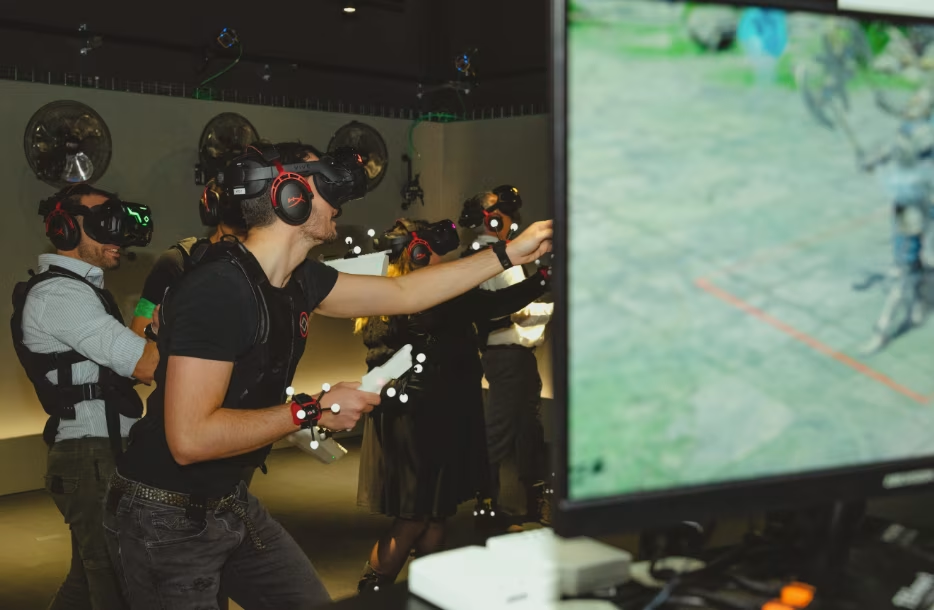
Sandbox VR is a virtual reality experience that combines physical movement, social collaboration, and mental engagement. Players can see and interact with one another naturally within cinematic virtual worlds using full-body motion capture, haptic feedback, and precision tracking. There are no joysticks, and no prior gaming experience is required. It’s just real movement and teamwork.
Popular experiences include:
Stranger Things: Catalyst: Created with Netflix and starring Matthew Modine as Dr. Brenner. Teams explore Hawkins Lab, the Rainbow Room, Mirkwood forest, and the Upside Down, using Eleven-style telekinetic powers to battle Demogorgons and Demobats.
Deadwood Mansion: A cooperative zombie survival adventure where players uncover dark secrets and rely on efficient communication to survive relentless hordes.
Squid Game Virtuals: Competitive but approachable mini-games inspired by the hit series, encouraging friendly rivalry, quick thinking, and repeat play to master each challenge.
Sandbox VR experiences are intentionally social and designed for groups of two to six at a time. Teams will:
Gear up together
Learn the world in a short tutorial
Play about 30 minutes of immersive gameplay
Relive the adventure through cinematic highlight videos
The result is a high-energy, future-forward experience that boosts communication and morale.
Creative Workshops and Collaborative Projects
These kinds of activities can be frustrating for your more analytical employees, but for the creatively-minded, they’re a chance to create something new and bond. Look for activities like art classes, cooking experiences, science experiments, or makerspaces.
These workshops aren’t focused on competition. The goal is shared creation and accomplishment. Understand that some of these activities, such as cooking experiences, require knowledge of employees' ability levels and/or allergies.
Outdoor Group Challenge
The physical and mental health benefits of fresh air and teamwork are innumerable. Employees are also more likely to share and bond in a new environment outside the office. Activities like nature walks, scavenger hunts, or outdoor sports are opportunities to overcome a shared challenge.
Granted, these activities are limited by the weather. It’s good to have a backup indoor option in case of unexpected rain or cold. Alternatively, plan an event that can be easily rescheduled.
Volunteer Activities That Align With Company Values
Community service that gives purpose beyond the workplace. Most communities have plenty of opportunities for corporate volunteerism. These are just some ideas:
Virtual fundraising events
Letter-writing campaigns
Community service projects
Adopt-a-park cleanup and restoration
Volunteer shift at a food bank
Food drive competition
Disaster relief remote coordination
First-aid kit supply drive
Giving back as a team improves job satisfaction and morale. There’s usually no competition aspect to these activities, with food drive competitions being the notable exceptions, but employees do get a sense of camaraderie.
How Do You Measure Success Without Killing The Vibe?
Making everyone fill out a form that rates the activity is a little boring and takes employees out of the moment. Employers need to assess the impact while keeping wellness activities enjoyable.
The previously mentioned quantitative post-survey questionnaires are a great start, but there are also effective ways to gather organic feedback at the moment.
Indicators of Successful Programs
Look for signs of potential long-term impacts: reduced burnout, improved retention, and enhanced morale.
Attendance: What percentage of the invited employees actually attended and stayed for the entirety of the event?
Repeat Attendance: What percentage of employees came back for the same event?
Enthusiastic Participation: This is more of an in-the-moment informal assessment. Do employees seem to be enjoying themselves? Are they bonding with others? Are they relaxing?
Employee Testimonials: It doesn’t have to be formal. Simply ask random attendees how they feel about the event and any feedback.
What Should Companies Consider When Planning Wellness Activities?
Use these practical implementation tips for planning your workplace wellness initiatives.
Budget: Don’t just consider your per-event budget. What time and resources are available throughout the entire year?
Inclusivity and Accessibility: Do you need to consider accessible options? Think of potential inclusivity/accessibility limitations of various events and plan accordingly. Every employee should be able to participate.
Communication Strategies: Consider how much time you have to promote the event and encourage participation without pressure.
Plan the Calendar: Build a predictable rhythm such as monthly, quarterly, or seasonal programming. Consistency drives trust and repeat participation more than one big event does.
Key Planning Tips
Use these tips to make planning a little easier.
Survey employees about interests and preferences
Offer a variety of activities to suit diverse needs
Consider group size, physical limitations, and schedule flexibility
Include clear instructions on upcoming wellness opportunities
Make participation voluntary but appealing
Be explicit about time commitment and what participation looks like.
Emphasize wellness benefits in messaging
Real-World Success Stories: How Teams Thrive With VR Experiences
Sandbox VR experiences increase collaboration, morale, and engagement for corporate teams of all sizes. Here’s a testimonial from a real employee who appreciated the unique opportunity for employee wellness.
“We're a small company always on the lookout for team bonding events that are interesting [and] easy to do...Sandbox VR blew our expectations out of the water! It was a really good experience, and I highly recommend it for teams and families alike!”
This kind of feedback highlights why immersive VR works so well. Teams aren’t just participating in an event, they’re sharing a new experience that encourages communication and genuine enjoyment.
Wellness That Works With Sandbox VR
The most effective corporate wellness activities prioritize choice and experiences that employees genuinely enjoy. When wellness feels social and thoughtfully planned, it strengthens morale, engagement, and long-term employee health. Move beyond outdated programs and book an immersive experience at Sandbox VR to support well-being and bring teams together.
FAQs
Are corporate wellness activities only for large teams?
No, they can benefit teams of all sizes. Sandbox VR venues and event packages can be scaled for larger groups or company outings by reserving multiple rooms or hosting back-to-back sessions.
Do Sandbox VR experiences require prior gaming skills?
No, experiences are designed to be accessible to most abilities. Clear instructions and intuitive controls make it easy for first-time users to jump in and enjoy the experience.
Can wellness activities improve both mental and physical health?
Yes, immersive and social activities support mental, physical, and emotional well-being.
Are VR experiences expensive for companies?
Costs vary, but group experiences offer high value per participant. Many companies find that the impact on morale and team cohesion outweighs the upfront investment.
Do employees need to participate if they don’t want to?
No, voluntary participation ensures experiences feel enjoyable, not forced. At Sandbox VR, employees can enjoy watching videos of coworkers playing and discussing the gameplay, without ever actually playing.
Other Articles

Low Cost Team Building Activities
Discover low cost team building activities with Sandbox VR and turn any budget into an unforgettable “best day ever” for your team.
Team Building Communication Games
Team building communication games come to life at Sandbox VR. Boost collaboration, communication, and trust through immersive VR adventures.
